

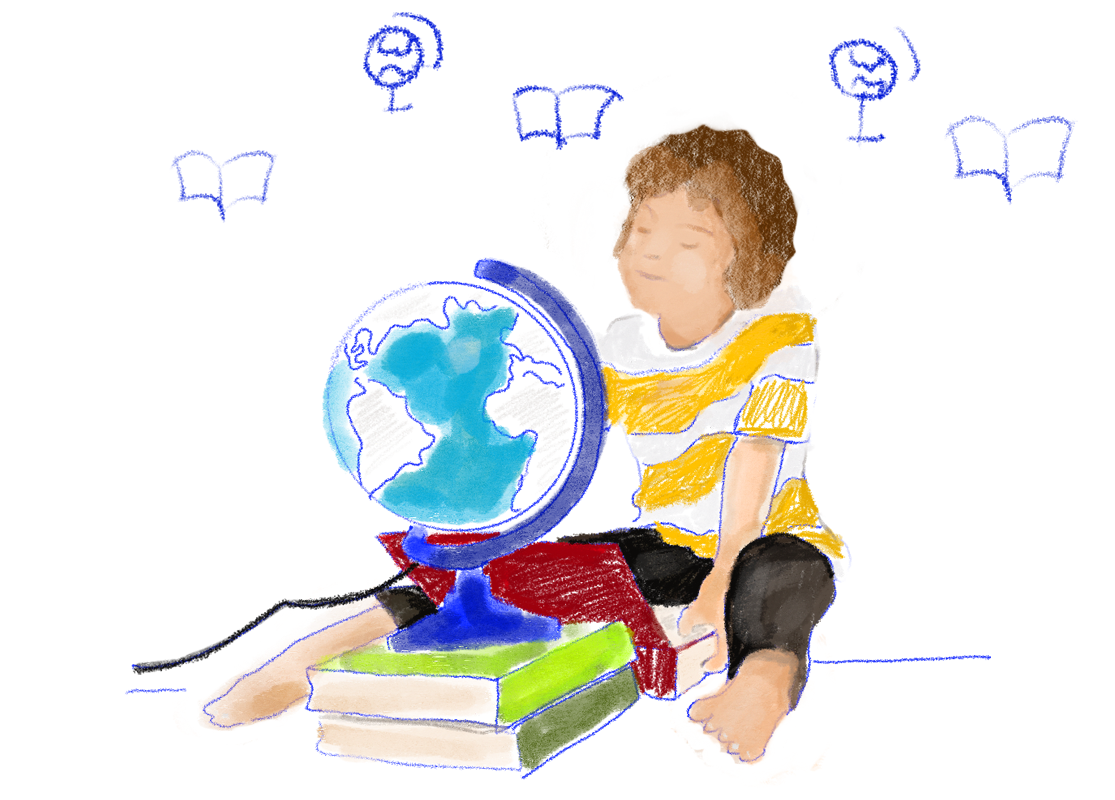
Every child possesses an innate curiosity about the world and a desire to learn. They don't want to be mere passive observers; they yearn to experiment, find solutions, and gain experiences. During play, they broaden their knowledge about their body, immediate surroundings, everyday objects, and even their own abilities. This process helps them navigate the challenging but exciting path to comprehensive development. To actively explore the world, a child's basic biological and psychological needs must first be met. Therefore, the environment in which a child lives greatly influences their cognitive development.
As children grow older, their fascination with the world often diminishes, as there's less newness in everyday life. The desire to explore can be dampened by monotony and passive learning methods. Children's creativity is often stifled by access to undemanding entertainment such as games, cartoons, or social media. So, how can we maintain a child's limitless wonder about the world? How can we encourage them to actively discover its mysteries?
- Allow children to gather their own, new experiences. Give them a sense of freedom in exploring the world.
- Ensure a sense of security and acceptance. Fear of rejection and criticism can significantly hinder curiosity.
- Be patient and understanding. Remember, a walk with a child discovering new, fascinating elements of nature can take a lot of time.
- Encourage questioning and expressing their opinions and doubts.
- Support, but do not replace or impose. From an early age, we introduce children to new objects, phenomena, elements of nature, and possible problem-solving methods. It's also crucial to leave space for the development of creativity and critical thinking, which means allowing them to experience and find solutions independently.
- Rediscover genuine curiosity about the world. Having shared experiences with children, exchanging observations and experiences, not only enhances their desire to continue exploring but also brings many positive emotions, including joy and satisfaction from their actions.
- Create opportunities for experimentation, for example, during simple research games.
- Organize interesting excursions that allow observation of plants, animals, and natural phenomena.
- Support your child's passions, remembering that frequent changes in interests are characteristic of early childhood.
- Be a partner in the difficult but extraordinary journey of discovering the world. Parents are the most important people in a child's life. Their positive attitude and willingness to explore the world with their child not only highly motivates the little one but also creates an excellent foundation for building a close parental relationship.
Igniting curiosity about the world in children is a process that requires engagement and patience from adults. However, remember that adults play the role of inspiring role models. By actively supporting children's activities and sharing passions, they encourage youngsters to continually expand their horizons.
Pedagogue Klaudia Sokołowska-Baryś for Marioinex Education
Bibliography:
-
Braun D., "Exploring and Discovering the World with Children," Kielce 2002
-
Furman E., "How to Support a Child's Development," Warsaw 2007