

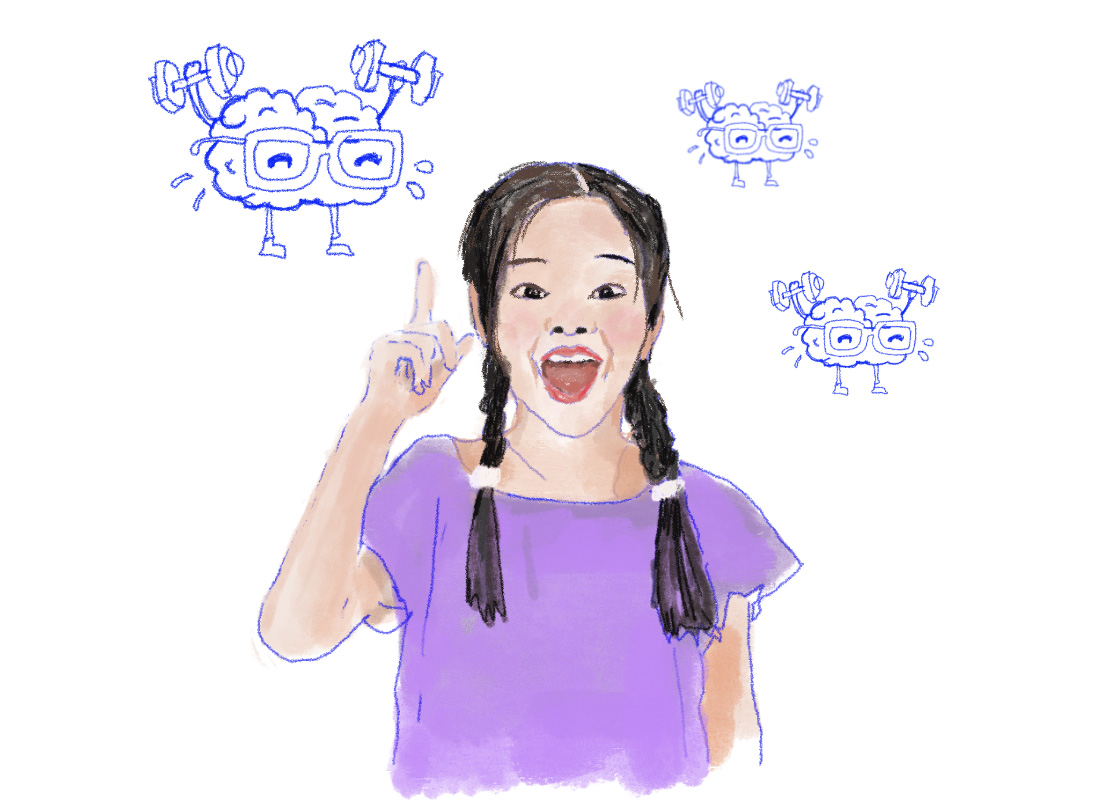
Brain development begins already in the fetal period and progresses most intensively in the first three years of a child's life. However, the brain reaches full maturity only in the mid-twenties. From then on, the efficiency of the brain gradually decreases. Fortunately, there are many ways to slow down this process. Exercising the brain, which means working on executive functions, memory, concentration, language functions, and socio-emotional skills, brings many benefits at every stage of our life.
Both children and adults can exercise their brains and have great fun doing so – by assembling mini waffle blocks, puzzles, tangrams, mosaics, solving crosswords, sudoku, coding, and encrypting messages.
Below we present additional exercises that will positively impact your brain's abilities in the long run. We've divided them into two levels of difficulty – regardless of age, start with the easier level. Don't give up when you encounter a problem with the solution. The more you think, the better for your brain! If you can't find the solution, skip the exercise and return to it the next day.
Remember that brain exercises should be performed systematically (preferably every day).
Task 1
Help the policeman catch the thief! Move alternately on blue and green blocks. You can only move vertically and horizontally. Is there only one way? Try to find the shortest one.

Task 2
Help the Zombie catch the Robot! Move alternately on blue and green blocks. You can only move vertically and horizontally. Is there only one way? Try to find the shortest one.

Pedagogue Klaudia Sokołowska-Baryś for Marioinex Education