

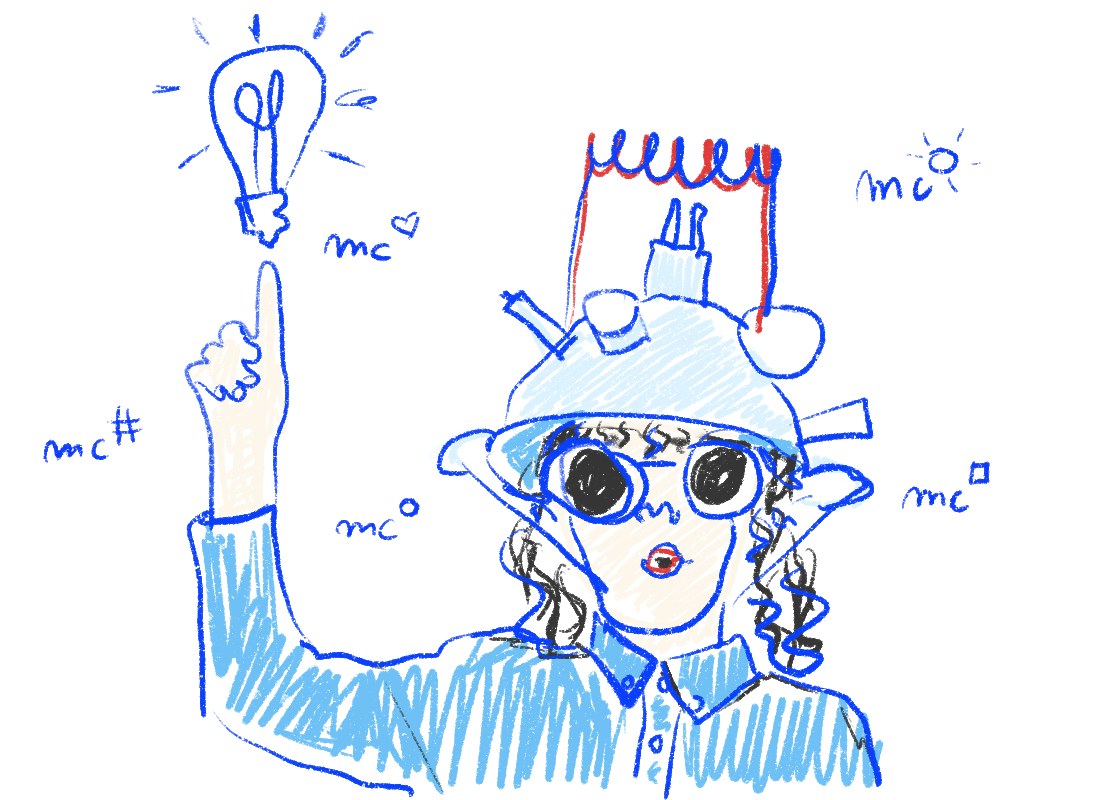
The concept of creativity is commonly associated only with eminent artists. However, psychologists recognize that there are at least several types and levels of this phenomenon.
Creative thinking can be developed, just like memory or logical thinking. Although great creators naturally have innate predispositions, we can successfully develop both potential and crystallized creativity. The former enables the activation of mental processes and unleashing behaviors present in the activity of artists. At this level, a person thinks creatively and creates original products. The latter, crystallized creativity, allows one to solve emerging problems. Developing both types of creativity positively impacts a person’s functioning in school and later in adult life.
The basis of creativity training is to leave the child with a lot of freedom in action and not to impose ideas and solutions. Below we present several games and exercises that develop potential and crystallized creativity:
Games from age 3-4 (also attractive for older children, including school-age):
- Space flight or boat trip.
Ask the child to create a spaceship or rowboat using available elements like blocks, a blanket, fabric pieces, chairs. The structure must be large enough to fit two people. Then assign the child the role of the spaceship or boat captain. Play appropriate music or sounds, like rocket launch or sea waves. Get on the base of your vehicle with the child. Imagine you are crew members. The child - the captain gives commands, e.g., row, try to maintain balance during a storm, levitate, etc. Initially, you may suggest 1-2 commands. Later, allow the child free activity without imposing ideas. - Freeform construction play.
The buildings invented by the child will surely amaze us! Ask them to tell you about their creations. An equally interesting story is likely to emerge. - What do I see?
The child lies down in a comfortable position, closes their eyes. Play a piece of instrumental music. Ask them to imagine it, then tell or paint the image they see in their fantasy. - Geometric pictures.
Give the child several paper geometric figures of different sizes and colors. Ask them to arrange them into a picture. - Outdoor or meadow games.
Ask the child to find elements of nature they like the most, e.g., flowers, grass, sticks, stones. This activity must be supervised by an adult – some plants are poisonous! Then ask them to create a picture on the grass or ground using the found elements.
Games from age 5-6 (also attractive for older children, including school-age):
- What if…
Prepare cards with names of objects, e.g., phone, TV, car, bed. The child draws one and considers what would happen if the object didn’t exist in the world, e.g., how would people communicate without phones? - Elaborated figures.
On a sheet, draw six identical geometric figures, e.g., squares. Ask the child to add elements to them, so that they become different objects/characters. - Improving inventions.
Choose a household item, e.g., a refrigerator. The child thinks about how we could improve it, e.g., automatically dispose of expired food, send a message with a list of missing items, etc. - The world in a hundred years.
Ask the child to think about what the world might look like in 100 years. They can present their vision verbally, write a story, draw, or make a model. - New ending.
Read a part of a well-known fairy tale to the child. Their task is to guide the characters' further fate to change the entire story's ending. In this task, we can exchange ideas - the parent starts a thread, the child adds the next part, or vice versa. - Play theater.
Cut out silhouettes of people or animals from colored paper. The child decorates them as they wish. Then, attach the silhouettes to a long stick, e.g., a skewer, pencil, straw. Stretch and attach a blanket in a way that allows us to hide behind it - that's our stage. We play so that only our puppets are visible. Encourage the child to improvise together.
Pedagogue Klaudia Sokołowska-Baryś for Marioinex Education
Bibliography:
- Fisher R., Teaching Thinking, Warsaw, 1999
- Nęcka E., Orzechowski J., Słabosz A., Szymura B., Creativity Training, Sopot, 2013