

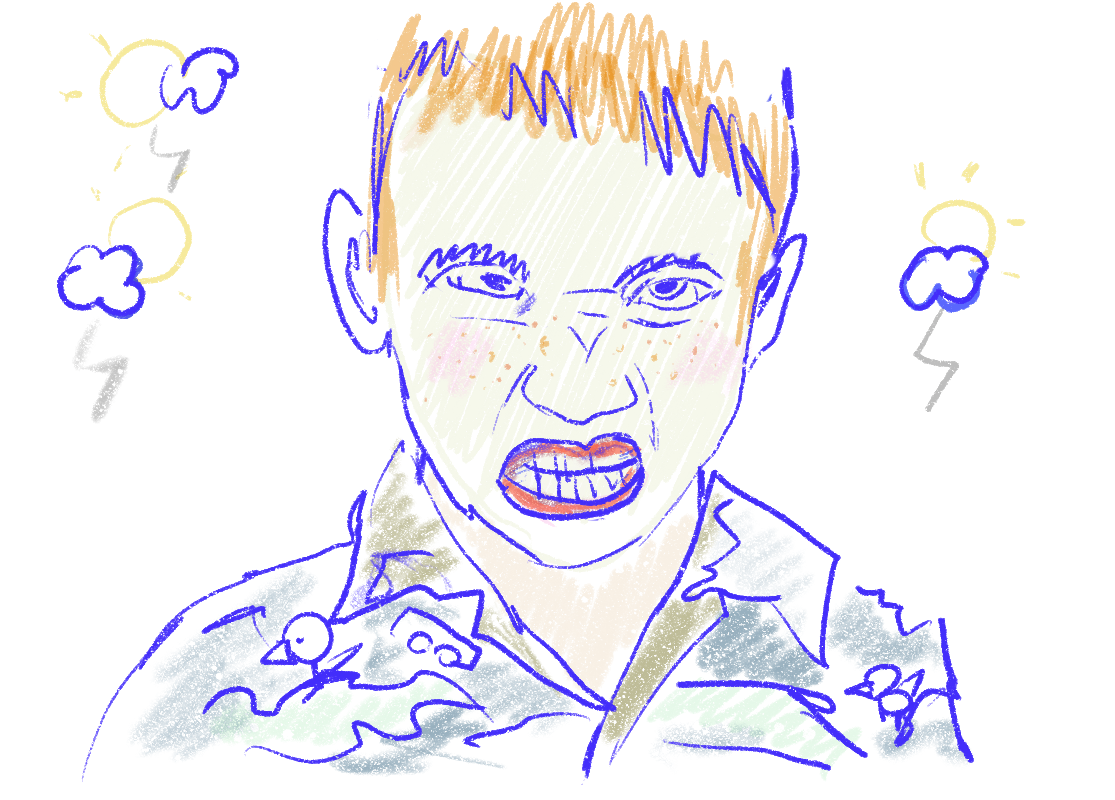
Aggressive behaviors are an inherent part of social life. Both adults and children exhibit them as a result of strong emotional tension.
The most significant increase in such behaviors is observed in preschool-aged children. This is due to the fact that they face new situations every day, which evoke a range of extreme emotions - from excitement, satisfaction, through fear and uncertainty. Preschoolers have not yet developed mechanisms for coping with an excess of emotions. They cannot name them.
Aggression is often a way to attract an adult's attention and an indirect request for help and support. Children only start to learn conscious coping with emotions and controlling aggression around the age of fourteen.
How can you help your child cope with aggression?
- Teach your child to name and differentiate emotions. Games such as naming emotions of others, showing their own feelings through gestures and facial expressions, completing sentences like "I'm angry when...", "I'm happy when...", reading stories that touch upon emotions and social relations.
- Talk about difficult situations. Tell your child that their behavior, such as hitting a friend, was painful and unpleasant for them. Never judge the child, only their behavior. Together, look for alternative ways to release anger.
- Do not trivialize your child's problems. Show them that you understand their anger, e.g., because a peer took their toy. Together, look for a way to solve the problem.
- Create an outlet for your child to release tension. Provide them with as much physical activity as possible, e.g., on a playground, sports field, or during sports activities.
- Limit screen time. Movies, cartoons, and games provide many additional stimuli which can be overwhelming for the child. Use relaxation techniques.
- Find time during or at the end of the day for calming down. Listen to relaxing music or close your eyes and imagine a meadow full of flowers. For these actions to have a positive effect, they must be carried out both at home and in preschool. Talk to the child's educators and jointly establish a plan of action.
- If aggressive behaviors become increasingly violent and proposed actions are not effective, it is worth consulting with a child psychologist. Free assistance can be obtained, for example, in a Psychological and Pedagogical Counseling Center.
Pedagogue Klaudia Sokołowska-Baryś for Marioinex Education
Bibliography:
Baum H., Sit Still? That’s Not for Me!, Kielce 2006
Jegier A., Szurowska B., Aggression Among the Youngest. How Preschool Can Help the Child and Family. In: ed. Szurowska B., Preschool in a Difficult Situation. Act in Time, Warsaw 2019
Rumpf J., Screaming, Hitting, Destroying. Aggression in Children up to 13 Years Old, Gdansk 2003