

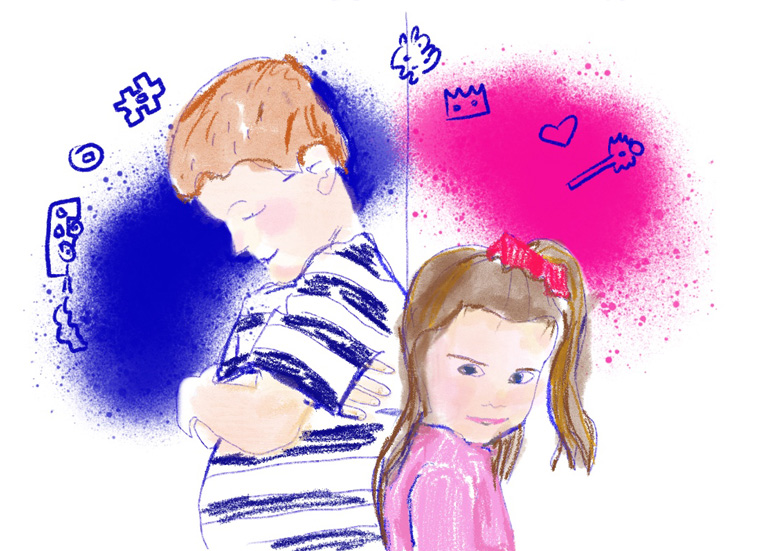
In our society, it has become customary to believe that blue color, toy cars, building blocks, and superhero figures are meant for boys, while dolls, dollhouses, and colorful ponies are for girls. This belief dominates among most adults, but often even 3-year-old children refuse to play with "girly" or "boyish" toys. Where does this come from? Do children from birth divide toys based on the gender of the user? Of course not.
Small children play with toys that they simply like the most. Boys in younger preschool groups often arrange furniture in dollhouses or prepare meals with wooden products. Girls build tall towers and lay roads for vehicles. Everything changes when they repeatedly hear that a particular toy is for girls or for boys. Advertisements, book content, and media messages also play a significant role. Boys invited by girls to play feel embarrassed and often refuse to participate, saying, "This is girly."
We often unconsciously confine children within rigid frameworks of what is "girly" and "boyish." Even if parents do not see a problem with this, they sometimes feel embarrassed or even ashamed in public when their son plays with a doll. So, we should consider what is wrong with boys playing with dollhouses or ponies? Why do we limit their social development? After all, we want them to be able to establish proper interpersonal relationships and find their place in society in the future. In the case of girls, critical comments are less frequent. However, it's often hard to find building blocks or logic games in their rooms. In preschool groups, girls spend significantly less time on construction play. Yet these activities greatly encourage the development of spatial imagination, planning, and construction skills. These skills are often underestimated, but they have a tremendous impact on children's further education and adult life.
Every type of play is important for the harmonious and comprehensive development of our children. Let's not limit it just because of rigid, often absurd social norms.
Pedagogue Klaudia Sokołowska-Baryś for Marioinex Education