

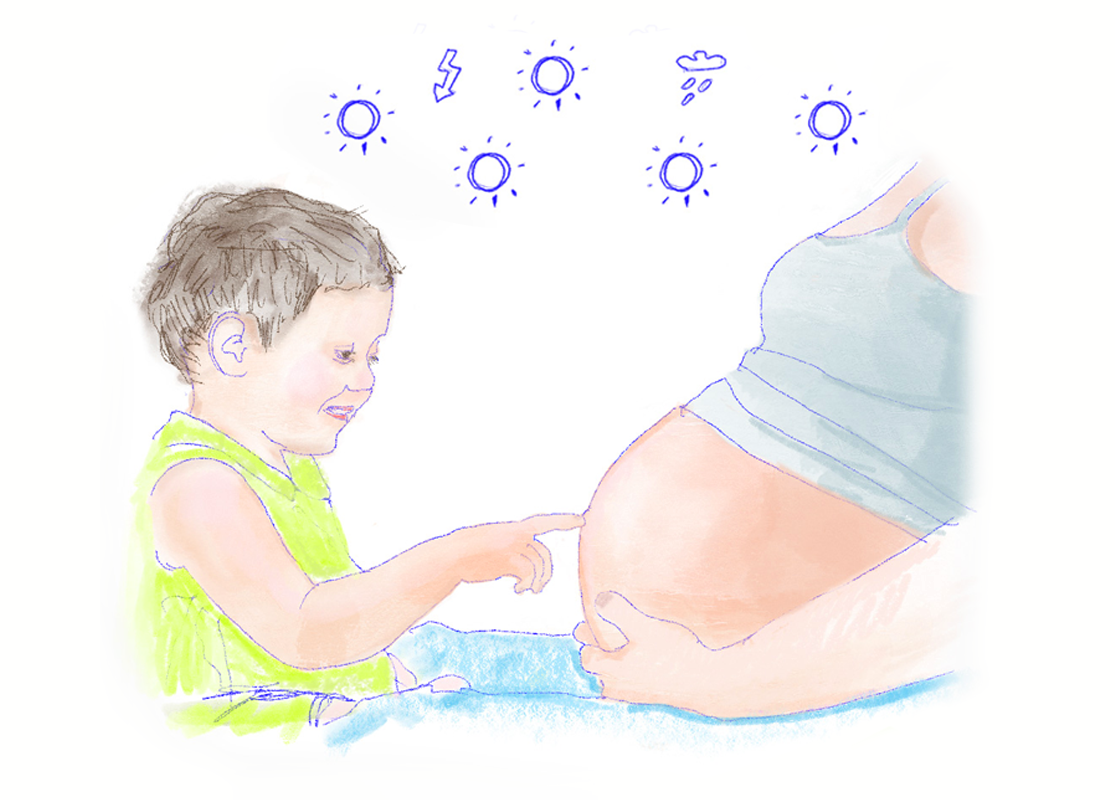
The fundamental emotional need of a child is to feel unconditional love from their parents. Every child wants it exclusively. Thus, it shouldn't surprise us that jealousy appears between siblings. It is entirely natural and inevitable.
Jealousy among siblings is usually discussed in the context of a new family member's arrival. For the first child, this is a massive change. From that point on, they must share the attention and closeness of the parents that they previously had exclusively. The child struggles with an abundance of negative emotions while trying to be a good brother or sister. However, it is rarely mentioned that all children in the family feel jealousy. Each fears losing the love and attention of their parents, although usually for different reasons.
However, sometimes parents, grandparents, or other close family members unconsciously exacerbate the rivalry between children, negatively impacting each of them and their future relationship. So, how should we react? What behaviors should be avoided? How should we talk to children about their feelings towards their siblings?
- Do not try to give everything "equally" to your children. This is very difficult, often impossible. It causes constant fear in you that every minor deviation may lead to a sense of injustice and fights between siblings. Try to consider each child's individual needs.
- Avoid any comparisons. Each of your children is different. Each has strengths and weaknesses. Do not use them as an argument in discussions.
- Do not manipulate a child's feelings, e.g., "You are so big and kind that you will surely share with your sister."
- Avoid labeling. Calling one child "exemplary" or "diligent" and another a "lazy" will not positively affect their relationship.
- Allow your child to express negative emotions they feel towards their siblings. Listen to them, show understanding. Try to name the emotions they are feeling (e.g., "I see that you are angry"). Then define their expectations (e.g., "You would prefer if your sister asked before throwing out your drawing").
- Suggest how they can signal their feelings to their siblings (e.g., "I don't like it when you throw out my things without asking").
- Try to spend time with just one child occasionally, so each of them can have you exclusively for a while.
In a conflict situation:
- Children are continuously developing their social skills, including the ability to participate in conflict. Not every quarrel between siblings requires parental intervention. React only when the conflict becomes overwhelming for one of the children – when very strong emotions, verbal or physical aggression appear.
- Do not take sides. Try to avoid arguments like "Give in, you are older."
- Identify the feelings accompanying the children.
- Listen to what each has to say.
- Show understanding of the problem.
- Encourage them to find a solution on their own. If impossible, help them. Remember, however, not to take sides in the conflict.
Remember, jealousy between siblings is natural. Don't worry or blame yourself every time your children start to argue. Participating in conflicts develops the ability to express and defend one's opinion, react to boundary crossing, and solve problems. However, try to ensure that none of the children feels wronged and misunderstood. Care for them to have the space and conditions to build a strong, positive bond.
Pedagogue Klaudia Sokołowska-Baryś for Marioinex Education
Bibliography:
- Baum H., Mom, He's Always Annoying Me! About Jealousy and Fights Between Siblings, Kielce 2005
- Gaber A., Mazlish E., Siblings Without Rivalry. How to Help Your Children Live Together So You Can Live Too, Poznań 2017
- Kaniak-Urban Ch., Lex-Kachel A., When Siblings Fight, Kielce 2007