

 Our Mini Waffle and Pastel Waffles can be found HERE.
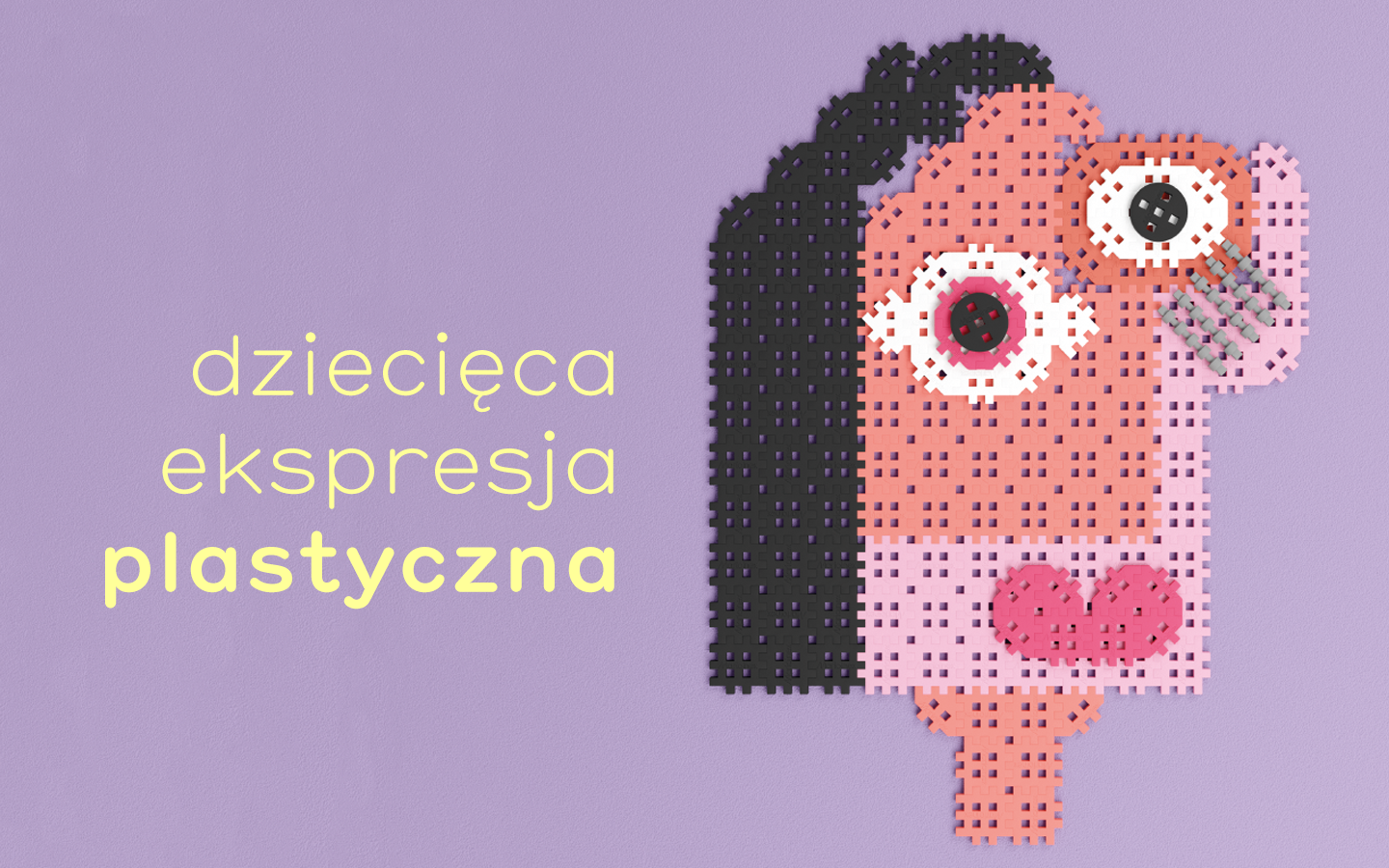
Child Artistic Expression
Artistic expression significantly influences a child's overall development. It allows children to express personal experiences, feelings, and sensations. Often, it also serves a therapeutic function. Artistic activity also affects the development of aesthetic sensitivity, creativity, and attention, shaping the ability to perceive proportions and perspective. It sensitizes children to the beauty of the surrounding world and allows them to visualize their imaginations. Additionally, during artistic activities, a child improves fine motor skills, visual-motor coordination, exercises memory, and develops the ability to orient on a sheet of paper.
Preschool children often surprise adults with the creativity of their artistic works. Unfortunately, their creative thinking can be hindered. Adults often focus on the technique and aesthetics of the work, forgetting the most important aspect – what the child wanted to convey through it.
However, for a child's development, free artistic activity is most important. Works made from ready-made elements, which somewhat impose a pattern of their execution, can be very valuable, but should not be the only artistic activity of the child. To develop creative thinking, and thus creativity, children should be allowed to experiment with materials, textures, and colors. The theme of the work should be broad enough for each child to interpret and present it individually. For this purpose, it is worth combining different artistic areas:
Our Micro Waffle can be found HERE
- Painting to Music. The child listens to a selected piece of classical music with closed eyes. Then, they represent it using a chosen artistic technique.
- Painting with Music. The child listens to music and simultaneously paints, for example, with fingers or a brush on a large sheet of paper. They express the emotions they feel while listening to classical music (it is worth choosing pieces of different moods and tempos).
- Artwork Inspired by Literary Text. Read a selected literary work. The child draws/paints/collages or sculpts events or associations related to the text.
- Movement as an Introduction to Artistic Activity. Define a theme, e.g., "jungle". The child tries to show their associations with movements, e.g., animal movements, the appearance of plants. Then, they represent this using a chosen artistic technique.
In today's world, motivation for artistic activity in children significantly decreases. There can be many reasons – reduced hand dexterity or visual-motor coordination disorders. However, more and more often, children prefer to use modern devices, such as phones, tablets, or game consoles. Such entertainment seems more attractive and certainly requires less energy from the child. However, it is important to continuously motivate the child to engage in artistic activities. Pay attention and discuss each work with them. Ask them to tell you what inspired its creation. It's worth keeping each work for a while. In no case should it be thrown away in the child's presence. Showing the creations to other family members will certainly bring the child a lot of pleasure and motivate them to create more.
Exposure to nature and architecture, as well as works of art, will significantly influence the increase in motivation and the development of aesthetic sense.
Pedagogue Klaudia Sokołowska-Baryś for Marioinex Education
Bibliography:
- Arciszewska-Binnebesel A., Creative Artistic Journeys. Using Art in Therapy and Art Therapy, Gdańsk 2020.
- Gruszczyk-Kolczyńska E., Zielińska E., Six-Year-Olds in Preschool. How to Develop Their Minds and Properly Prepare Them for School?, Closer to Preschool, 5.200, May 2018.
All products, perfectly suited for expressing children's artistic expression and developing their spatial imagination, can be found in our STORE.
