

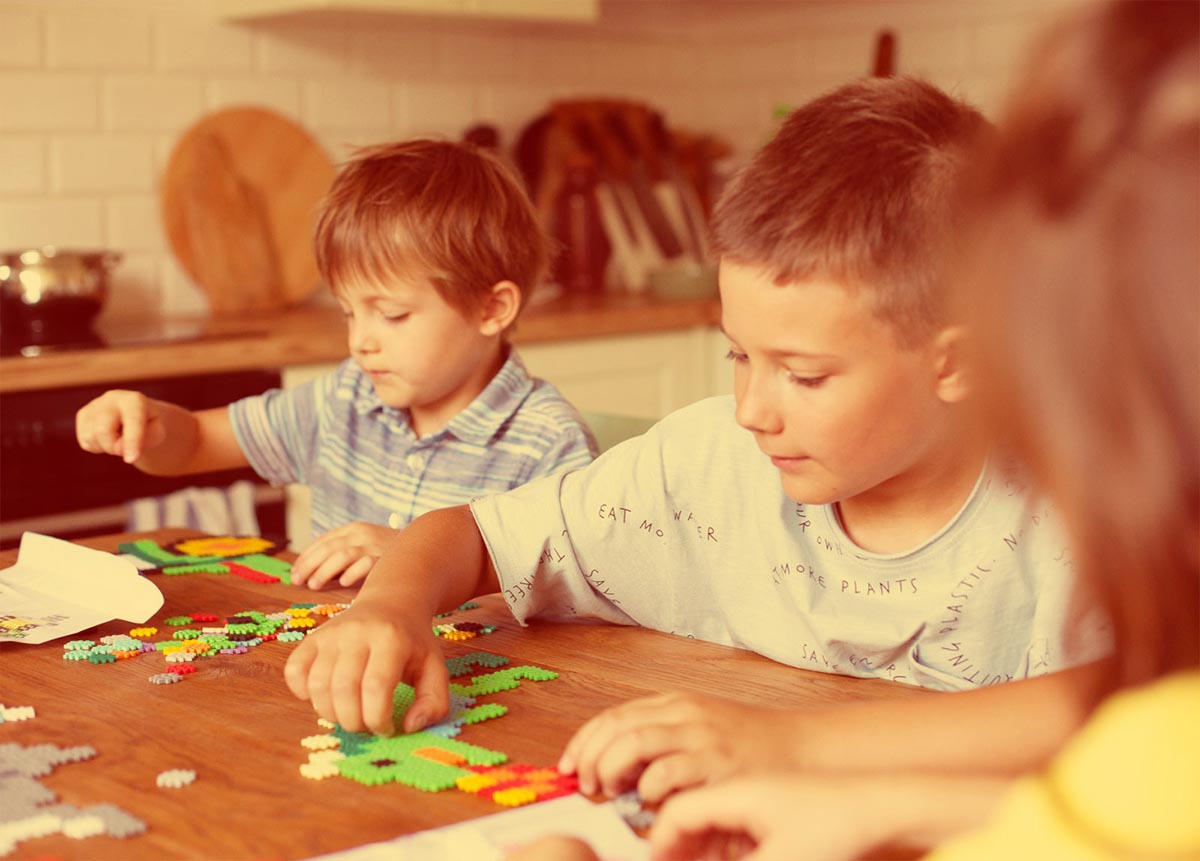
Play is a fundamental and one of the earliest activities of every child. It fosters the comprehensive and harmonious development of a young person. It's not just a source of entertainment. It greatly influences all spheres of development: physical, cognitive, emotional, and social. We usually pay most attention to the physical and intellectual development of a child. From the first month of life, we follow publications about skills they should acquire, including: sitting up, crawling, the first word. Undoubtedly, play satisfies the need for movement and action, refines motor skills, including precise hand and finger movements. During various activities, the child learns about the surrounding world through senses. They experience, experiment, draw conclusions. They expand their vocabulary and develop spatial orientation. However, we often forget about the development of equally important functions: emotional and social.

Play triggers different emotions, teaches ways of expressing them, and coping with difficult feelings. It introduces higher values, such as responsibility and fairness. It teaches competition, including accepting both victory and defeat. During play, children encounter various difficulties, learn to overcome them, thereby training patience and perseverance. They begin to see the final effect of their work. In play, children learn various aspects of social life. They learn to adhere to established rules. They start to notice and understand the emotions and reactions of others. They are participants in the first disputes, which they try to resolve. They develop the ability to communicate with others, present their arguments, and the difficult art of compromise. All these experiences positively affect their ability to cooperate with peers. Children begin to realize that everyone in a social group assumes specific roles. They see the sense of group or collective work. They derive joy from it. We distinguish several types of play: construction, physical, thematic, educational. Their choice depends on needs and the planned effect. However, it's worth remembering that each of them, conducted in an atmosphere of safety, voluntariness, and pleasure, positively influences all spheres of a child's development.
Several play suggestions conducive to the emotional and social development of a child:
- Emotional charades. One child steps forward and shows a chosen emotion. Others guess. Then they switch roles.
- Defining mood through weather. Children name weather phenomena that correspond with their mood, e.g., rain = sadness.
- Expressing emotions through movement. We ask the child to show their mood through gestures, facial expressions.
- Mirror reflection. Children pair up. They stand opposite each other. One person makes movements, the other imitates them.
- Puppets. Children pair up. One person pretends to pull strings, moving the limbs of their partner. At the end of the game, it’s good to talk about the children's feelings during both roles.
- What am I talking about? A child describes an object of their choice. Other participants can ask questions answerable with yes or no. They guess what object is being described.
- Board games. They teach adherence to rules. They develop the ability to win and lose.
- Painting together on large sheets of paper.
- Group construction of large, spatial buildings with blocks.
- Thematic games, e.g., playing shop, house, school. Such games should be conducted without adult participation. Children should be allowed to lead discussions, solve conflicts independently.
Pedagogue Klaudia Sokołowska-Baryś for Marioinex Education
