

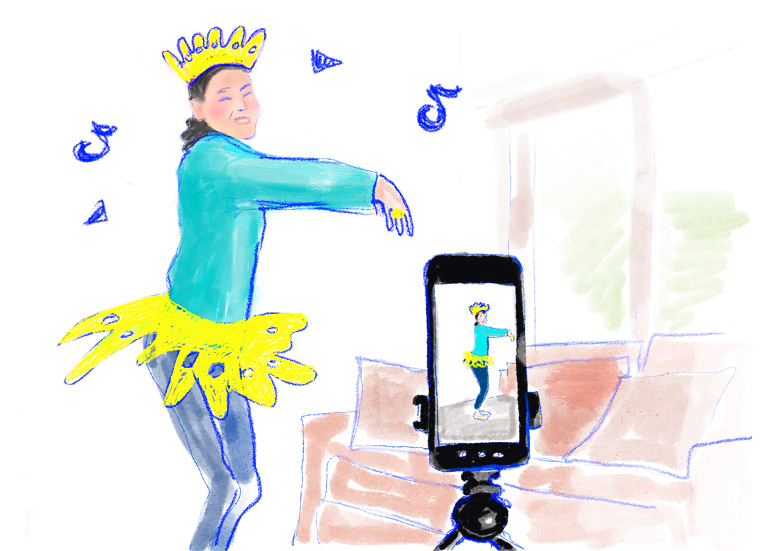
TikTok is currently one of the most popular social networking apps among children and teenagers. There, one can find an endless amount of short videos with varied content. The app is easy and intuitive to use. Besides passive watching, users can also create and edit their own content.
Importantly, the app is intended for people over the age of 13. Unfortunately, an increasing number of much younger children are creating accounts there. This isn’t particularly difficult – one only needs to enter any birth date and provide a phone number. Using a web browser, it’s not even necessary to have an account to watch the videos, which are often inappropriate for minors.
Upon registering, we select topics of interest. Just a few moments into using the app, the quality of most of the content posted there becomes evident. The first video in the "education and science" category features a girl showing provocative, often vulgar outfits that, in her opinion, would suit teachers of various subjects. In the "sports" category, we see the buttocks of a very young girl doing sports exercises. Another video shows soccer players fighting. Profanity is often used in the videos.
Young people use TikTok for entertainment purposes. However, the often vulgar, sexual, and violent content posted there significantly impacts their emotional development. There are also many seemingly harmless but vacuous videos. Young people can spend hours scrolling through them, wasting their free time. Of course, TikTok also hosts valuable content, but it can be difficult to sift through the vast amount of mind-numbing material.
Registered users can create and post their own content in the app. As a "reward," they receive positive reactions from viewers. Young users seeking popularity may start recording videos where they engage in risky behaviors, such as participating in challenges that threaten their health or life.
It's crucial for parents to take an interest in and discuss their children's online activities. They should review the content of websites or apps and make informed decisions about whether their child should use them. Parents need to be aware of the potential dangers and know how to protect their children. TikTok offers a "restricted mode," which aims to filter and block inappropriate content.
While not perfect, it significantly reduces the number of vulgar videos. The "family pairing" feature is also useful, allowing a parent to control the content of videos watched and posted by their child, decide who can contact them, and limit the time spent on the app.
Most social media apps are intended for children over the age of 13. Older but still underage individuals should only use them with parental consent. Whether and how their children use social media should be a conscious and well-thought-out decision by parents. However, their role doesn't end there. To ensure their children's safety, parents should continuously monitor their activities in the virtual space.
Pedagogue Klaudia Sokołowska-Baryś for Marioinex Education