

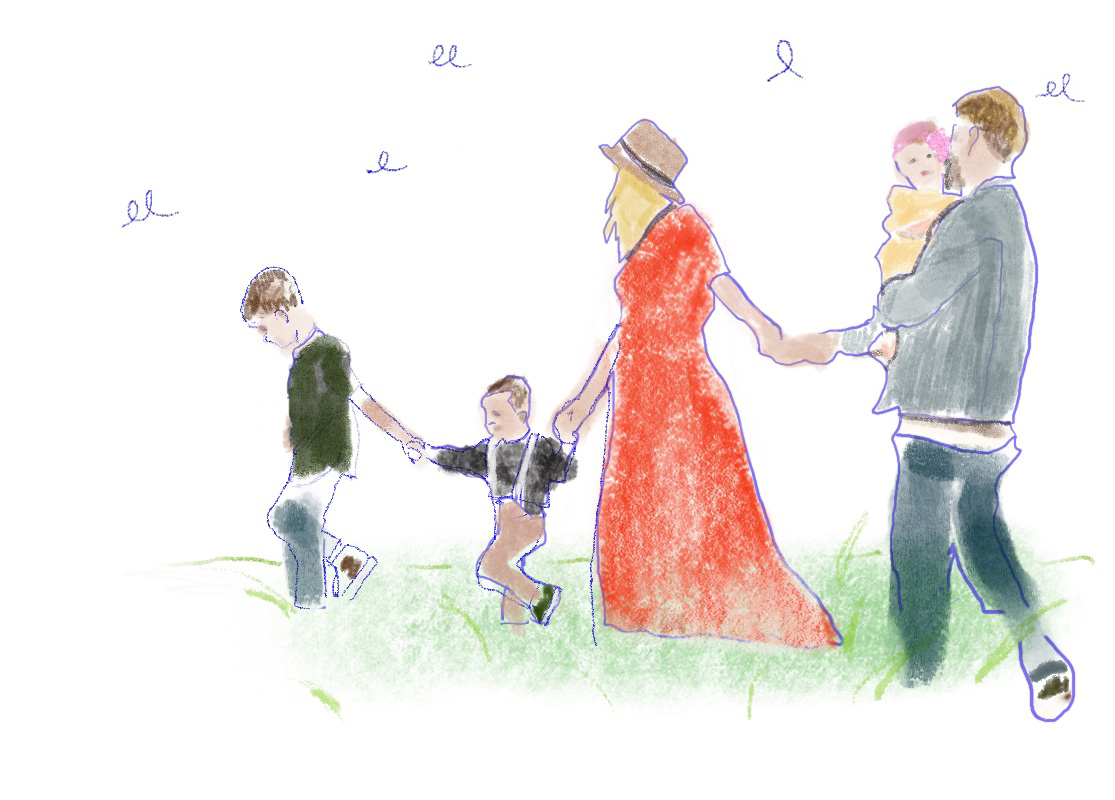
Throughout our lives, we form many interpersonal relationships. Some are temporary and superficial, others are close and long-lasting. Some serve to achieve current goals, while the rest significantly impact our lives. However, there is a particular type of relationship, and that is the bond between a child and its parents.
In the 1960s, British psychiatrist John Bowlby developed the attachment theory. According to his concept, the formation of attachment is biologically conditioned in most mammals. In humans, the bond between a child and a caregiver follows a strictly defined pattern and lasts a lifetime. It manifests in behaviors aimed at maintaining emotional and physical closeness.
A child's bond with its closest people affects its entire life. The quality of this bond impacts its development and functioning, as well as all future relationships.
The first years of a child's life are crucial in building a bond. It develops most intensely during the first eight months. By the third year of life, attachment patterns are almost entirely formed and may only undergo subtle changes.
Mary Ainsworth conducted a series of studies that allowed her to create three attachment patterns. Mary Main and Judith Solomon expanded this classification by adding a fourth category.
- Secure Attachment
In this attachment pattern, the caregiver is physically and emotionally available to the child. They are empathetic, quickly read, and respond to the child's needs.
A child who has formed a secure bond with a caregiver perceives themselves as valuable, loved, and important. They can communicate with other people.
- Anxious-Avoidant Attachment
The caregiver is often not physically and emotionally available to the child. They do not respond to their needs. The child feels rejected. It has low self-esteem, a sense of lack of agency. It suppresses its emotions, avoids closeness with other people. It struggles in interpersonal relationships. - Anxious-Ambivalent Attachment
The caregiver unpredictably responds to the child's needs. They often struggle with their emotions. The child begins to signal every need, even the smallest, to increase the chance of a parental response. It feels that it has no influence on the behavior of others. It is very afraid of rejection. - Disorganized Attachment
This type of bond usually forms in children who are neglected, abused, or mistreated by their caregivers. These individuals struggle to control their emotions. They often exhibit conflicting behaviors and may resort to violence. They have a very poor opinion of themselves.
The bond between a child and a parent is formed regardless of the quality of their relationship. Studies confirm that even neglected or abused infants become attached to their caregivers. However, this is not a relationship based on mutual trust, acceptance, and security. The child does not enter life full of faith in their abilities. Their bond with parents will affect all future interpersonal relationships. An improper attachment pattern can also increase the likelihood of personality disorders in them.
The first three years of a child's life are crucial in building a bond. For the rest of their life, we strengthen and nurture it. In light of this information, comments like "he's manipulating you" or "don't carry him or he'll get used to it" seem at least absurd. A child needs an empathetic caregiver, sensitive to their needs. Only a relationship based on closeness, tenderness, and understanding will allow us to create a strong and safe bond with the child.
Pedagogue Klaudia Sokołowska-Baryś for Marioinex Education
Bibliography:
- Bowly J., Attachment, Warsaw 2007
- Stawicka M., Child Self-Destructiveness in Light of Attachment Theory, Poznań 2008
- Tryjarska B. (ed.), Closeness in the Family. Bonds in Childhood and Disorders in Adulthood, Warsaw 2012